
NATIONAL TEAM OF IMPLICIT BIAS TRAINING PROFESSIONALS
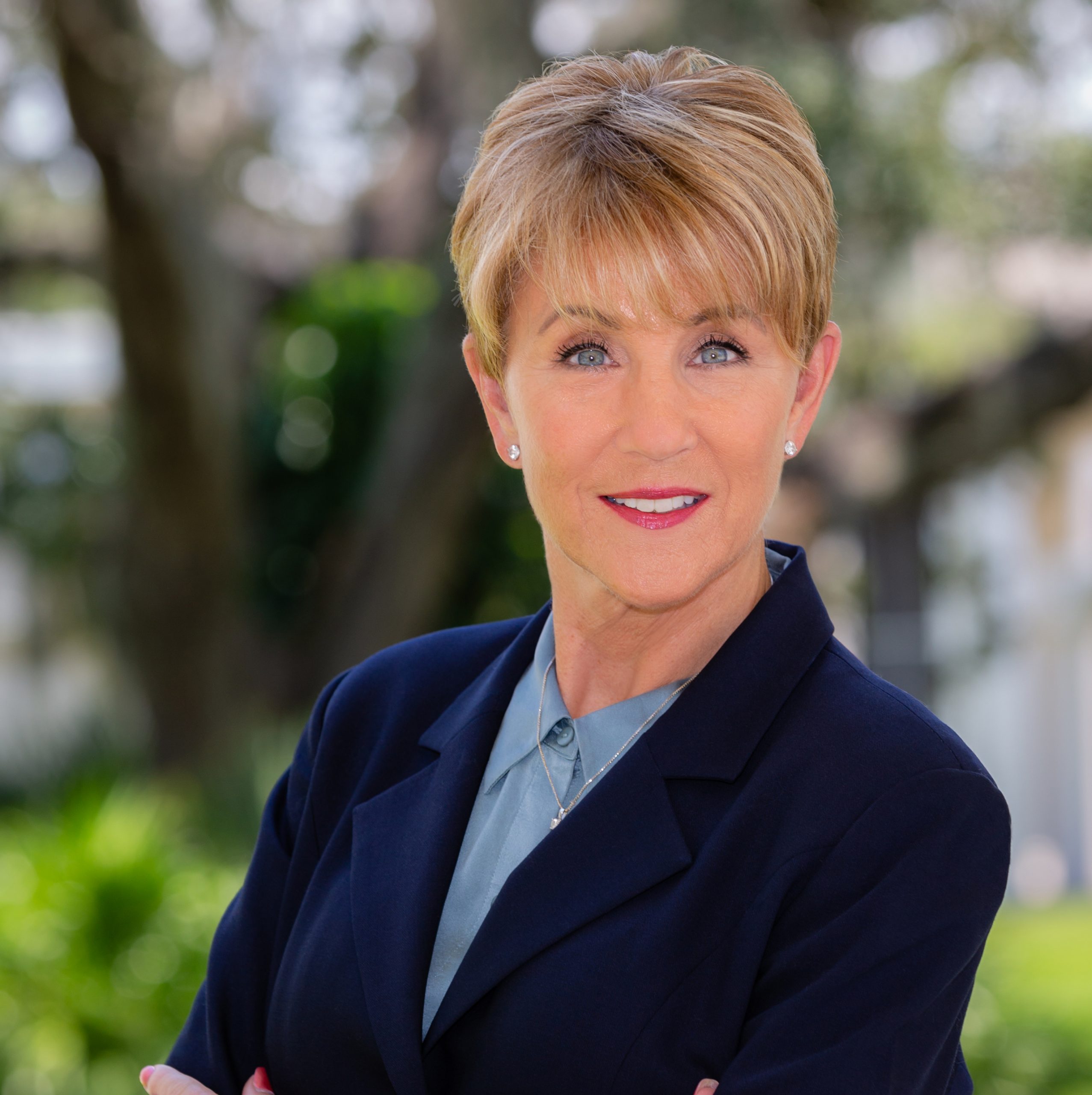
Photo Credit: Laura Lyon | University of South Florida
Lorie Fridell, PhD
Chief Executive Officer and Executive-Level Instructor
Dr. Lorie Fridell, a Professor Emerita of Criminology at the University of South Florida and a former Director of Research at the Police Executive Research Forum (PERF), is a national expert on biased policing. She has authored and co-authored a number of books, chapters and articles on the topic. Her books include Racially Biased Policing: A Principled Response, By the Numbers: A Guide for Analyzing Race Data from Vehicle Stops, and, most recently, Bias-Free Policing: A Science-Based Approach.
With the assistance of experts on the science of bias and on policing and with funding from the USDOJ COPS Office, Dr. Fridell and Anna Laszlo (FIP’s Curriculum Designer) created the “Fair & Impartial Policing” (FIP) Training Program. FIP, LLC is now the #1 provider of implicit bias awareness training for law enforcement in North America. Dr. Fridell and FIP have been highlighted in The Police Chief, Psychology Today, the Washington Post, the Harvard Business Review, National Geographic, Mother Jones, and other periodicals. Dr. Fridell trains FIP at the command/executive level and is a frequent keynote speaker at conferences on the important topic of biased policing and implicit bias awareness training. Her speaking skills are indicated by her five university-level teaching awards.
Selected Fridell publications on Bias and the Criminal Justice System:
Fridell, L.A., and Marier, C.* (Forthcoming). The Color of Confinement: Racial Bias and Jail Populations Across America. American Journal of Criminal Justice.
Marier, C.* and Fridell, L.A. (2023). Racial Threat and Punitive Police Attitudes. Justice Quarterly, 40(6): 859 – 884. https://www.tandfonline.com/doi/full/10.1080/07418825.2022.2127842
Reeds, C.L.*, Fridell, L.A., Santos, M.R., and Cochran, J. (2023). A Test of the Association between Racial Economic Threat and Racial Disparities in Jail Incarceration across Counties in the United States. Forthcoming in Race and Justice. https://journals.sagepub.com/doi/10.1177/21533687221126754?icid=int.sj-abstract.citing-articles.7
Fridell, L.A., and Marier, C.* (2023). The Impact of Suspect Race and Precipitating Incident on Community Members’ Assessments of Deadly Force Reasonableness. Homicide Studies, 27(1): 142 – 166. https://journals.sagepub.com/eprint/P7P3JTXTCWUAVXDBBAMV/full
Lorie Fridell (2017). Producing Bias-Free Policing: A Science-Based Approach. New York, NY: Springer Publishing and the George Mason University Center for Evidence-Based Criminology.
Fridell, L.A. (2017). Assessing Disparity in Police Use of Force: A Research Note. American Journal of Criminal Justice, 42: 502 – 513.
Fridell, L.A. (2016). Racial aspects of police shootings: Reducing both bias and counter bias. Criminology & Public Policy, 15(2): 481 – 489.
Fridell, L.A. & Lim, H. (2016). Assessing the Racial Aspects of Police Force Using the Implicit- and Counter-bias Perspectives. Journal of Criminal Justice, 44 (March), 36 – 48.
Lorie Fridell (2004). By the Numbers: A Guide for Analyzing Race Data from Vehicle Stops. Washington, DC: The Police Executive Research Forum.
Lorie Fridell (2005). Understanding Race Data from Vehicle Stops: A Stakeholder’s Guide. Washington, DC: The Police Executive Research Forum. (This guide summarizes key points from By the Numbers.)
Selected Fridell Publications on Other Topics:
Academic Articles:
Richardson, D.A.* and Fridell, L.A. (2024). The “Reasonableness Divide”: Comparing Community Members’ Assessment of Force Reasonableness to Legal Standards. Justice Quarterly. https://doi.org/10.1080/07418825.2024.2378712
Fridell, L.A., Maskaly, J.,* and Donner, C.M.* (2021). The Relationship between Organisational Justice and Police Officer Attitudes toward Misconduct. Policing and Society: An International Journal of Research and Policy, 31(9), 1081 – 1099.
Marier, C.* and Fridell, L.A. (2020). Demonstrations, Demoralization, and Depolicing. Criminology and Public Policy, 19, 693 – 719.
Maskaly, J., Donner, C.M., & Fridell, L.A. (2018). Police CEOs and Subordinates’ Perceptions of Workplace Misconduct: Examining the Effect of Demographic Similarity on Attitudinal Congruence. Policing: An International Journal of Police Strategies & Management.
Jennings, W.G., Fridell, L.A., Lynch, M., Jetelina, K.K., & Gonzalez, J.M.R. (2017). A quasi-experimental evaluation of the effects of police body-worn cameras (BWCs) on response-to-resistance in a large metropolitan police department. Deviant Behavior, 38(11), 1332 – 139.
Donner, C.M., Maskaly, J., & Fridell, L.A. (2016). Social bonds and police misconduct: An examination of social control theory and its relationship to workplace deviance among police supervisors. Policing: An International Journal of Police Strategies & Management, 39(2), 416 – 431.
Donner, C.M., Fridell, L.A. & Jennings, W.G. (2016). The relationship between self-control and police misconduct: A multi-agency study of first-line police supervisors. Criminal Justice & Behavior, 43(7), 863 – 878.
Jennings, W.G., Lynch, M.D. & Fridell, L.A. (2015). Evaluating the impact of police officer body-worn cameras (BWCs) on response-to-resistance and serious external complaints: Evidence from the Orlando Police Department (OPD) Experience utilizing a randomized controlled experiment. Journal of Criminal Justice, 2015: 480 – 486.
Donner, C., Maskaly, J., Fridell, L.A., & Jennings, W.G. (2015). Policing and Procedural Justice: A State-of-the-Art Review. Policing: An International Journal of Police Strategies & Management, 38(1), 153 – 172. doi:10.1108/PIJPSM-12-2014-0129.
Jennings, W.G., Fridell, L.A. & Lynch, M.D. (2014). Cops and cameras: Officer perceptions of the use of body-worn cameras in law enforcement. Journal of Criminal Justice, 42 (6), 549 – 556.
Lim, H., Fridell, L.A. & Lee, H. (2014). The impact of supervision and neighborhood context on police use of less-lethal force: A multi-level analysis. Journal of Police Science, 14(2), 155-182.
Authored and Edited Books:
Ederheimer, J. & Fridell, L.A., Eds. (2005). Chief Concerns: Exploring the Challenges of Police Use of Force. Washington, DC: The Police Executive Research Forum.
Fridell, L.A. & Wycoff, M.A., Eds. (2004). Community Policing: Past, Present and Future. Washington, DC: The Police Executive Research Forum and the Annie E. Casey Foundation.
Alpert, G.P. & Fridell, L.A. (1992). Police Vehicles and Firearms: Instruments of Deadly Force. Prospect Heights, IL: Waveland Press.
Chapters:
Fridell, L.A. (2010). “Deadly Force Policy and Practice: The Forces of Change.” In McCoy, C. (Ed), To Protect Life: Readings on Police Accountability. Washington, DC: Urban Institute Press, pp. 29-51.
Fridell, L.A. (2010). “Use-of-Force Policy, Policy Enforcement and Training.” In Dunham, Roger & Alpert, G.P. (Eds). Critical Issues in Policing: Contemporary Readings, sixth edition. Prospect Heights, IL: Waveland Press, pp. 513-531.
Fridell, L.A. (2015). Above chapter reprinted in Dunham, R. & Alpert, G.P. (Eds). Critical Issues in Policing: Contemporary Readings, seventh edition. Prospect Heights, IL: Waveland Press, pp. 548 – 567.
Fridell, L.A. (2007). “Building Community Trust around Issues of Force.” In Ederheimer, J. (Ed). Chief Concerns: Strategies for Resolving Conflict and Minimizing Use of Force. Washington, D.C.: The Police Executive Research Forum, 13-45.
Johnson, W., Warren, M., Ederheimer, J., & Fridell, L.A. (2007). “Conducted Energy Devices: PERF’s National Studies and Guidelines for Consideration.” In Ederheimer, J. (Ed). Chief Concerns: Strategies for Resolving Conflict and Minimizing Use of Force. Washington, D.C.: The Police Executive Research Forum, 99-132.
Fridell, L.A. (2005). “Improving Use-of-Force Policy, Policy Enforcement, and Training.” In Ederheimer, J. & Fridell, L.A. (Eds). Chief Concerns: Exploring the Challenges of Police Use of Force. Washington, DC: The Police Executive Research Forum, 21-55.
Fridell, L.A. (2004). “The Defining Characteristics of Community Policing.” In Fridell, L.A. & Wycoff, M.A. (Eds). Community Policing: Past, Present and Future. Washington, DC: PERF and the Annie Casey Foundation, 3-12.
Fridell, L.A. (2004). “The Results of Three National Surveys on Community Policing.” In Fridell, L.A. & Wycoff, M.A. (Eds). Community Policing: Past, Present and Future. Washington, DC: PERF and the Annie Casey Foundation, 39-58.
Inspector (retired) Mary Hoerig, MBA
Chief Operating Officer and Master National Instructor
Inspector Hoerig was a member of the Milwaukee Police Department for 25 years until she retired in 2016 as an Inspector (Deputy Chief). She served in many areas of the police department including Patrol, Criminal Investigations, Internal Affairs, Intergovernmental Services, Field Operations, and Administration. Prior to retirement, she was assigned to command the Strategic Management Bureau which includes Strategic Analysis, Records, Technology, Community Development, Grants, Policy, Special Events Logistics, and the Office of Management, Analysis and Planning. Inspector Hoerig received her bachelor’s degree in Criminal Justice Management from Concordia University and is a graduate of the Northwestern University Center for Public Safety (Police Staff and Command), and PERF’s Senior Management Institute for Police (SMIP). Inspector Hoerig studied Law Enforcement Leadership at Marquette University and received her MBA from Alverno College.
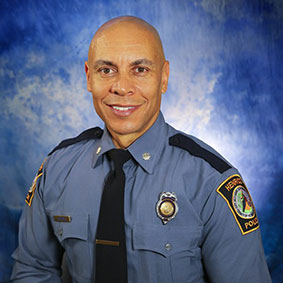
Assistant Chief (retired) Clarence T. Hunter, Jr
Master National Instructor
Assistant Chief Clarence T. Hunter, Jr. joined the Henrico County (VA) Police Division in July 1996 as a Police Officer. During his tenure, Asst. Chief Hunter served in Criminal Investigations, Organized Crime, and SWAT. He also served as Commanding Officer for Patrol Operations, South Station, and Personnel and Training. Asst. Chief Hunter holds a bachelor’s degree in Organizational Leadership. He is a graduate of the Administrative Officers Management Program at North Carolina State University, the Police Executive Leadership School at the University of Richmond, and the Senior Management Institute for Police, sponsored by the Police Executive Research Forum in Boston, MA. Prior to becoming a member of the Police Division, Asst. Chief Hunter served for six years as a Police Officer with the City of Richmond (VA) Police Department. He also served in the United States Army, 82nd Airborne Division, and the Virginia Army National Guard, retiring at the rank of Master Sergeant.
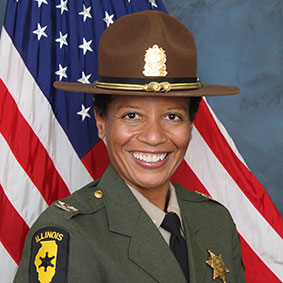
Colonel (retired) JoAnn D. Johnson
Master National Instructor
Colonel Johnson retired from the Illinois State Police in 2018 after 29 years of service. She began her law enforcement career in 1989 as a Trooper with the Illinois State Police (ISP) in the Chicagoland area. During her tenure with the department, she worked Patrol, General Criminal Investigations, and Narcotics Investigations. Colonel Johnson served as the Operations Lieutenant in Patrol, the Curriculum Section Supervisor at the ISP training academy, and the Chief of the Office of Equal Employment Opportunity. She was appointed as Lieutenant Colonel of the Division of Internal Investigation in 2013 and was later appointed to Colonel of that division in 2016 where she served until her retirement. She is a graduate of the Northwestern University Center for Public Safety, School of Police Staff and Command Class #282. Additionally, Colonel Johnson received her Bachelor of Science in Administration of Justice from Southern Illinois University-Carbondale, and a Master of Arts in Organizational Leadership from Lewis University.

Lieutenant Colonel (retired) Brenda Leffler
Master National Instructor
Lieutenant Colonel Brenda L. Harteau began her career in 1993 as a road trooper for the Colorado State Patrol and retired after 24 years of service. Following the September 11 attacks, Lt. Colonel Leffler was central to the development of the state’s fusion center, the Colorado Information Analysis Center (CIAC). Leffler was promoted to Lieutenant Colonel in 2012 and acted as a regional commander. She supervised field districts, the Criminal Investigations Branch, the Training Services Branch, Internal Affairs, and the Strategic Budget Analysis Section. During her tenure, Lt. Colonel Leffler served on multiple boards and committees to include the Colorado Special Olympics Executive Committee. She has additional law enforcement experience from her 10 years of service in the United States Army. Lieutenant Colonel Leffler has a master’s degree in Forensic Psychology and is a graduate of the 241st Session of the FBI National Academy.

Deputy Chief Anthony (Tony) Raimondo
Master National Instructor
Mr. Raimondo currently serves as the Executive Director of Development Services for the City of Sanford. His responsibilities cover all facets of community development and include Planning, Building, and Code Enforcement. Mr. Raimondo also brings 26 years of Law Enforcement experience to the FIP Team. Mr. Raimondo retired from the Sanford Police Department as the Deputy Chief of Police in 2020. He served in numerous supervisory positions within the department including Patrol, Street Crimes, and Narcotics/Vice Unit, and he has held administrative leadership positions in Professional Standards, Training, and Tactical Operations. Mr. Raimondo has an MS in Criminal Justice from the University of Central Florida. He is also a graduate from the FBI National Academy 260th Session and the Command Officers Development Course through the Southern Police Institute, University of Louisville. Prior to entering law enforcement, Mr. Raimondo served nine years in the United States Marine Corps as an infantryman and ANGLICO fire control team member. He is a veteran of operations in Panama and the Persian Gulf War.

Captain (retired) Harvey S. Powers
Senior National Instructor
Captain Powers is a 25-year veteran of the Richmond (Virginia) Police Department, serving there until he retired in May 2018. For the last five years of his Richmond career, Captain Powers was the Director of the Richmond Police Training Academy. In addition to his role in the Richmond Police Department, Captain Powers served for eight years as a regional leader and fundraiser for the Law Enforcement Torch Run to benefit Special Olympics. Captain Powers holds undergraduate degrees from James Madison University in both Psychology and History and has done graduate work in community agency counseling and accounting. He is a graduate of PERF’s Senior Management Institute for Police (SMIP) and the Professional Executive Leadership School (PELS). Currently, he is the Director of Law Enforcement Services for the Department of Criminal Justice Services for the Commonwealth of Virginia. In this capacity, he manages police training and decertification for twenty thousand police officers in the state.

Lieutenant (retired) Cathleen Wichmann
Senior National Instructor
Lieutenant Wichmann retired in 2016 after a 25-year career with the Milwaukee Police Department. She served in many areas of the Police Department including Patrol, Communications, Tactical Enforcement (SWAT), and the Police Academy. Prior to retirement, she served as a Lieutenant over the Neighborhood Policing Bureau which included strategic/tactical operations, and supervision of the Tactical Enforcement, Motorcycle, Canine, Fugitive Apprehension, and Street Crimes units. Lieutenant Wichmann spent two tours of duty with the Tactical Enforcement Unit, both as a Sergeant and Unit Commander. During her tenure with the Milwaukee PD, she was a certified instructor for DAAT, EVOC (Master Instructor), Professional Communications, Active Shooter, Chemical Munitions Less-Lethal/Distraction Devices, Firearms (handgun, shotgun, patrol rifle, ECD), and Fair and Impartial Policing. She is a national instructor for IACP’s Leadership in Police Organizations and the Women’s Leadership Institute. Lieutenant Wichmann received her bachelor’s degree in Criminal Justice from the University of Wisconsin-Platteville. She also served in the US National Guard as a Military Police Officer, achieving the rank of 1st Lieutenant.

Deputy Chief Ian Cyr, MA
National Instructor
Deputy Chief Ian Cyr is in his 25th year of service with the University of Massachusetts (Amherst) Police Department. He has held a wide variety of assignments including Field Training Officer, Defensive Tactics and Firearms instructor, Tactical Team leader, Chemical Munitions instructor, and Police Academy instructor. He is also responsible for incident command during major events at the university. Deputy Chief Cyr has been instrumental in developing the Citizens Police Academy and collaborates to develop strategic planning efforts for the department. He holds a B.S. in Criminal Justice and a M.A. in Regional Planning. Deputy Chief Cyr graduated from the 234th session of the FBI National Academy. Cyr is currently assigned as the Deputy Chief of Police overseeing department operations and administrative functions. The UMass Police is a 63-member fully sworn police department serving the University community of approximately 33,000 people.
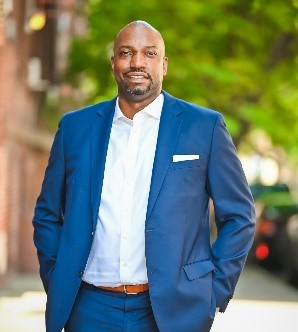
Dr. Rudolph B. Hall Jr.
National Instructor
Dr. Hall is currently a member of the Federal Monitor’s team acting as the oversight body for the New York Police Department (NYPD) where he reviews police officer performance regarding police citizen interactions, constitutional policing, and accountability for the agency and its members. Prior to this position, Dr. Hall was Assistant Chief of investigations for the New York State Attorney General (NYAG) where he led the Office of Special Investigation. His office oversaw all investigations of deaths of individuals after having contact with police or peace officers across the State of New York. Before joining the NYAG’s office, Dr. Hall worked for the NYPD for 21 years, sixteen of which he held a supervisory rank across various assignments. Dr. Hall earned his Doctorate in Education focusing on Executive Leadership from St. John Fisher College in 2020 and earned a MPA at John Jay College.

Lieutenant (retired) Scott T. Wong
National Instructor
Lieutenant Wong was hired as a Police Officer for the City of Palo Alto in 1982. He was promoted to Agent in 1993, promoted to Sergeant in 1996, and promoted to the rank of Lieutenant in 2009. During his 29-year career, Lieutenant Wong served as a Field Training Officer, Property Crimes Detective, Recruiting Team member, SWAT Team member, Internal Affairs Team member, Secretary and President of the POA, Body Crimes Detective Supervisor, Field Training Supervisor, Traffic Team Supervisor, K-9 Team Manager, and founding President of the Palo Alto Police Managers’ Association. After his retirement in 2011, Lieutenant Wong worked part-time as the Palo Alto Police Department 911 Communications Manager from 2012-2013, and a Reserve Police Officer from 2013-2015.